Showing posts with label Mikiverse Hip Hop. Show all posts

Wednesday, November 13, 2013

WHY THE CIA IS INVOLVED IN GEOENGINEERING PROJECTS

Susanne Posel (OC),- The Central Intelligence Agency (CIA) has commissioned a study with the national Academy of Sciences (NSA) to determine of geoengineering would allow humans to alter the weather of the planet and halt the forces of man-made climate change. The National Oceanic and Atmospheric Administration (NOAA), and NASA are involved in this project.

Edward Price, spokesperson for the CIA stated: “It’s natural that on a subject like climate change the Agency would work with scientists to better understand the phenomenon and its implications on national security.”

Chem or Contrails - Photo La Responsable 

The study will analyze, technical implications of geoengineering techniques, feasibility of geoengineering techniques, evaluate impact and national security concerns, methods to manage solar radiation management, methods to artificially cool the temperature of the planet, investigative proposals for removing CO2 from the atmosphere.
Several scientists are being funded by Bill Gates to implement various cooling methods into the atmosphere. David Keith of the University of Calgary in Alberta, Canada, and Ken Caldeira of the Carnegie Institution have gathered experts in the field of energy, economists and policymarkers to present detailed information regarding the technical and intellectual properties of using chemicals to cool the temperature of the planet.
Gates has become the biggest private sector funder of geoengineering projects.

To Gates, geoengineering will “buy us time” to deal with the problems at hand. For now, Gates is willing to sacrifice the structure of our biosphere in order to push his ideas for green electricity generation and transportation.

In 2010, the UN Convention on Biological Diversity stated that experiments on the earth’s weather patterns must be halted until more research can be conducted to confirm their positive effects.

Scientists in the UK, Netherlands and Germany say that there is no consensus on climate change within the scientific community. That the theory that greenhouse gases cause global warming is a just that – a theory.

Furthermore, there is no accord on how the phenomenon of changing global temperature and extreme weather is being created.
These respected scientists said: “The Greenland and Antarctic ice sheets have been reported to be losing mass at accelerating rates. However, at present there is no scientific consensus on whether these reported accelerations result from variability inherent to the ice-sheet-climate system, or reflect long-term changes.”
Even the Intergovernmental Panel on Climate Change (IPCC) stated in a recent report that there is “no long-term acceleration of sea level has been identified using 20th-century data alone.”
The IPCC assessed that it would take centuries for the ice sheets to melt to the degree that they are affecting sea levels.

Studies claim that centuries away the most dangerous effects of man-made climate change will destroy the known world. Carbon dioxide and the global disbursement of the greenhouse gas have dominated the alarmist claims of certain scientists.

Susanne Posel via Occupy Corporatism

http://nsnbc.me/2013/07/21/why-the-cia-is-involved-in-geoengineering-projects/


CLIMATIC WARFARE HAS BEEN EXCLUDED FROM THE AGENDA ON CLIMATE CHANGE

Weather Warfare: Beware the US Military’s Experiments with Climatic Warfare
Michel Chossudovsky (CRG) , – HAARP is a weapon of mass destruction, capable of destabilising agricultural and ecological systems globally. Climatic warfare’ potentially threatens the future of humanity, but has casually been excluded from the reports for which the IPCC received the 2007 Nobel Peace Prize.
 

Rarely acknowledged in the debate on global climate change, the world’s weather can now be modified as part of a new generation of sophisticated electromagnetic weapons. Both the US and Russia have developed capabilities to manipulate the climate for military use.

HAARP_Public Domain 

Environmental modification techniques have been applied by the US military for more than half a century. US mathematician John von Neumann, in liaison with the US Department of Defense, started his research on weather modification in the late 1940s at the height of the Cold War and foresaw ‘forms of climatic warfare as yet unimagined’. During the Vietnam war, cloud-seeding techniques were used, starting in 1967 under Project Popeye, the objective of which was to prolong the monsoon season and block enemy supply routes along the Ho Chi Minh Trail.
The US military has developed advanced capabilities that enable it selectively to alter weather patterns. The technology, which is being perfected under the High-frequency Active Auroral Research Program (HAARP), is an appendage of the Strategic Defense Initiative – ‘Star Wars’. From a military standpoint, HAARP is a weapon of mass destruction, operating from the outer atmosphere and capable of destabilising agricultural and ecological systems around the world.

Weather-modification, according to the US Air Force document AF 2025 Final Report, ‘offers the war fighter a wide range of possible options to defeat or coerce an adversary’, capabilities, it says, extend to the triggering of floods, hurricanes, droughts and earthquakes: ‘Weather modification will become a part of domestic and international security and could be done unilaterally… It could have offensive and defensive applications and even be used for deterrence purposes. The ability to generate precipitation, fog and storms on earth or to modify space weather… and the production of artificial weather all are a part of an integrated set of [military] technologies.’

In 1977, an international Convention was ratified by the UN General Assembly which banned ‘military or other hostile use of environmental modification techniques having widespread, long-lasting or severe effects.’ It defined ‘environmental modification techniques’ as ‘any technique for changing –through the deliberate manipulation of natural processes – the dynamics, composition or structure of the earth, including its biota, lithosphere, hydrosphere and atmosphere, or of outer space.’

While the substance of the 1977 Convention was reasserted in the UN Framework Convention on Climate Change (UNFCCC) signed at the 1992 Earth Summit in Rio, debate on weather modification for military use has become a scientific taboo.

Military analysts are mute on the subject. 

Meteorologists are not investigating the matter and environmentalists are focused on greenhouse gas emissions under the Kyoto Protocol. Neither is the possibility of climatic or environmental manipulations as part of a military and intelligence agenda, while tacitly acknowledged, part of the broader debate on climate change under UN auspices.

Alaska-HAARP 

The HAARP Programme

Established in 1992, HAARP, based in Gokona, Alaska, is an array of high-powered antennas that transmit, through high-frequency radio waves, massive amounts of energy into the ionosphere (the upper layer of the atmosphere). Their construction was funded by the US Air Force, the US Navy and the Defense Advanced Research Projects Agency (DARPA). Operated jointly by the Air Force Research Laboratory and the Office of Naval Research, HAARP constitutes a system of powerful antennas capable of creating ‘controlled local modifications of the ionosphere’.

According to its official website, www.haarp.alaska.edu , HAARP will be used ‘to induce a small, localized change in ionospheric temperature so physical reactions can be studied by other instruments located either at or close to the HAARP site’.

But Rosalie Bertell, president of the International Institute of Concern for Public Health, says HAARP operates as ‘a gigantic heater that can cause major disruptions in the ionosphere, creating not just holes, but long incisions in the protective layer that keeps deadly radiation from bombarding the planet’.

Physicist Dr Bernard Eastlund called it ‘the largest ionospheric heater ever built’. HAARP is presented by the US Air Force as a research programme, but military documents confirm its main objective is to ‘induce ionospheric modifications’ with a view to altering weather patterns and disrupting communications and radar.

According to a report by the Russian State Duma: ‘The US plans to carry out large-scale experiments under the HAARP programme [and] create weapons capable of breaking radio communication lines and equipment installed on spaceships and rockets, provoke serious accidents in electricity networks and in oil and gas pipelines, and have a negative impact on the mental health of entire regions.’*

An analysis of statements emanating from the US Air Force points to the unthinkable: the covert manipulation of weather patterns, communications and electric power systems as a weapon of global warfare, enabling the US to disrupt and dominate entire regions. Weather manipulation is the pre-emptive weapon par excellence. It can be directed against enemy countries or ‘friendly nations’ without their knowledge, used to destabilise economies, ecosystems and agriculture. It can also trigger havoc in financial and commodity markets. The disruption in agriculture creates a greater dependency on food aid and imported grain staples from the US and other Western countries.

HAARP was developed as part of an Anglo-American partnership between Raytheon Corporation, which owns the HAARP patents, the US Air Force and British Aerospace Systems (BAES).

The HAARP project is one among several collaborative ventures in advanced weapons systems between the two defence giants. The HAARP project was initiated in 1992 by Advanced Power Technologies, Inc. (APTI), a subsidiary of Atlantic Richfield Corporation (ARCO). APTI (including the HAARP patents) was sold by ARCO to E-Systems Inc, in 1994. E-Systems, on contract to the CIA and US Department of Defense, outfitted the ‘Doomsday Plan’, which ‘allows the President to manage a nuclear war’. Subsequently acquired by Raytheon Corporation, it is among the largest intelligence contractors in the World. BAES was involved in the development of the advanced stage of the HAARP antenna array under a 2004 contract with the Office of Naval Research.

The installation of 132 high frequency transmitters was entrusted by BAES to its US subsidiary, BAE Systems Inc. The project, according to a July report in Defense News, was undertaken by BAES’s Electronic Warfare division. In September it received DARPA’s top award for technical achievement for the design, construction and activation of the HAARP array of antennas.
The HAARP system is fully operational and in many regards dwarfs existing conventional and strategic weapons systems. While there is no firm evidence of its use for military purposes, Air Force documents suggest HAARP is an integral part of the militarisation of space. One would expect the antennas already to have been subjected to routine testing.

Under the UNFCCC, the Intergovernmental Panel on Climate Change (IPCC) has a mandate ‘to assess scientific, technical and socioeconomic information relevant for the understanding of climate change’. This mandate includes environmental warfare. ‘Geo-engineering’ is acknowledged, but the underlying military applications are neither the object of policy analysis or scientific research in the thousands of pages of IPCC reports and supporting documents, based on the expertise and input of some 2,500 scientists, policymakers and environmentalists. ‘Climatic warfare’ potentially threatens the future of humanity, but has casually been excluded from the reports for which the IPCC received the 2007 Nobel Peace Prize.

Michel Chossudovsky, Centre for Research on Globalization

http://nsnbc.me/2013/11/10/climatic-warfare-excluded-agenda-climate-change/


IPCC WARNS NOT TO STOP CHEMTRAILS, AKA ‘SOLAR RADIATION MANAGEMENT’

Randy Ananda (FFN) , – The Fifth Assessment Report of the Intergovernmental Panel on Climate Change (IPCC) warns that, despite global side effects and long-term consequences, geoengineering techniques involving solar radiation management (SRM) should be maintained:
aviation-and-the-global-atmosphere-ipcc-1999-150px 
“If SRM were terminated for any reason, there is high confidence that global surface temperatures would rise very rapidly to values consistent with the greenhouse gas forcing.” [emphasis in original]
“Climate Change 2013: The Physical Science Basis,” (referred to as “AR5”) supersedes the former report published in 2007. The IPCC’s First Assessment Report was published in 1990. (In case the Summary containing that warning is changed, here is the version downloaded on Nov. 3, 2013.)
The discussion in the Summary for Policymakers and in the body of AR5 commends solar radiation management over carbon dioxide removal methods, which are limited in their efficacy on a global scale, yet admits that neither are ideal, and that both geoengineering techniques will have long-term and potentially unknown consequences.
“While the entire community of academia still pretends not to know about the ongoing reality of global geoengineering,” comments Dane Wigington at Geoengineering Watch, “the simple fact that they are now discussing geoengineering in the latest IPCC report indicates that the veil is beginning to lift.”
Solar radiation management comprises various techniques aimed at reflecting or diverting solar radiation back into space, essentially increasing the planet’s albedo (reflectivity). Many geoengineers, along with the IPCC, prefer solar radiation management methods for carbon dioxide removal as a climate fix, given the planet’s complex carbon feedback loops, and the much cheaper and quicker method of spraying our skies with albedo-enhancing particles.
“Block the sun but continue to spew billions of tons of carbon dioxide into the atmosphere,” is how Eli Kintisch characterizes SRM in his 2010 book, Hack the Planet.
In a world run by sanity, we would forego fossil fuels for free and abundant solar energy, coupled with the Tesla’s development of free electricity, to meet the world’s energy needs, without destroying our nest by extracting and burning fossil fuels.
Solar radiation management has “three essential characteristics,” notes the International Risk Governance Council (IRGC). “It is cheap, fast and imperfect,” [4] Citing geoengineering activist, David Keith, the IRGC explains that by injecting 13,000 tons of sulfate aerosol into the stratosphere on a daily basis, they would offset the radiative effects of a doubling of atmospheric CO2 concentrations. This compares to having to remove “225 million tons per day of CO2 from the atmosphere for 25 years.”
Were reason to prevail, we would capture solar energy, not block it; we would shun fossil fuels, not wage ecocidal wars to seize remaining supplies. In today’s world, however, policymakers have diverted billions of dollars into blocking the sun. Efficient systems cost around $10 billion a year, “well within the budgets of most countries,” notes the IRGC.
In addition to warning policymakers in its Summary that Chemtrails must continue, the IPCC also denies that such programs exist. Buried within Chapter 7, the IPCC simply states, “SRM methods are unimplemented and untested.”
It’s an odd statement, given the warning that to stop SRM would heat the planet. Plus, the IPCC admits in AR5:
“New and improved observational aerosol datasets have emerged since AR4. A number of field experiments have taken place.”
One of the programs listed, the Intercontinental Chemical Transport Experiment, covered the Northern Hemisphere, measuring aerosols originating in Asia and crossing the Pacific into North America, then continuing across the continent, across the Atlantic Ocean and into Europe. Headed by the International Global Atmospheric Chemistry Project, these flights ran in 2004 and 2006, and reportedly numbered less than four dozen.
india-on-ship-instrumentsAnother “experiment,” the European Aerosol Cloud Climate and Air Quality Interactions Project, started in January 2007 and ended in December 2010 – running for a full four years, and included Africa.
In addition to the joint regional projects, several nations also perform smaller field trials within their own borders. India admits to running SRM programs for over ten years.
Surely, field trials move way beyond “experiments” when they cover continents and cross oceans and are performed over a period of years.
Another inconsistency in AR5 is its discussion of persistent contrails. Despite the dire warning in the Summary urging policymakers to continue with their solar radiation management programs lest the planet’s surface cooks, the body of AR5 sees persistent contrails as responsible for only a very slight increase in radiative forcing (where solar energy is radiated back into space).
Overall, the IPCC has “medium confidence” that these persistent contrails and their induced cirrus clouds do not change surface temperatures on the planet. This contradicts what scientists found during the 3-day grounding of all US planes after 9/11 (except those scooting Saudis out of the country). Ground temperatures increased 2-3 ºC during the absence of contrails, persistent or not.
Developed in 1988 by the United Nations Environment Program and the UN’s World Meteorological Organization, the IPCC maintains its silence on military weather modification applications which continue to skew the climate data. “Extreme weather and climate events” are linked to climate change while no mention is made of government programs deliberately aimed at modifying the weather and inducing earthquakes, drought, rain, and tsunamis. Planetary weapons developed by the US have a long history.
But the IPCC remains mum on these projects, except to deny they exist, while at the same time urging in its Summary that they must continue or global warming will spike. The 2013 IPCC report states:
“Theory, model studies and observations suggest that some Solar Radiation Management (SRM) methods, if practicable, could substantially offset a global temperature rise and partially offset some other impacts of global warming, but the compensation for the climate change caused by greenhouse gases would be imprecise (high confidence).” [emphasis in original]
To claim that solar radiation management methods (which include Chemtrails and HAARP-induced changes) are “unimplemented and untested” is patently absurd, and contradicts a library of evidence.
At the very least, while the veil may be lifting on geoengineering practices, there is still an apparent effort to conceal the extent to which the planet is already being engineered.
Policy makers for the most part are not going to read the 2000+ page IPCC report but will rely instead on the Summary, which (again) warns that if solar radiation management “were terminated for any reason, there is high confidence that global surface temperatures would rise very rapidly to values consistent with the greenhouse gas forcing.”
Climate report for the next decade? More HAARP and Chemtrails ahead.
Randy Ananda, Food Freedom News

http://nsnbc.me/2013/11/12/ipcc-warns-not-to-stop-chemtrails-aka-solar-radiation-management/


Monday, November 4, 2013

SCIENTISTS HAVE FOUND THE FIRST CONCRETE REASON WHY WE NEED SLEEP

We know we need to sleep. We know our brains and bodies work better after sleep. But what we didn’t know, until now, was why.
Scientists have just reported the first major mechanical reason our brains need to sleep — certain cleaning mechanisms in the brain work better when we shut the brain down.
Just like how dump trucks take to the city streets during the pre-dawn hours because there’s less traffic, our brain’s cleaners also work best when there’s less going on.
“This study shows that the brain has different functional states when asleep and when awake,” study researcher Maiken Nedergaard, of the University of Rochester said.
“In fact, the restorative nature of sleep appears to be the result of the active clearance of the by-products of neural activity that accumulate during wakefulness.”
We’ve known that our brains consolidate memories during sleep and perform other important functions.
There are also benefits to the body during sleep — resting allows our muscles, bones, and organs to repair themselves.
It also keeps our immune system healthy.
We know that sleep has all of these benefits, but until now we didn’t know any of the specific changes that bring about these sleep benefits.
Charles Czeisler, a sleep researcher at Harvard Medical School in Boston, told Science Magazine’s Emily Underwood that this is the “first direct experimental evidence at the molecular level” for why we need to sleep.
The paper was published in the journal Science on Oct. 17.
Toxic cells
All of our cells accumulate waste while they are working, and these waste products can be toxic. If they aren’t removed they can build up and kill our cells. Throughout the rest of the body the lymphatic system washes these waste products away, but the brain is cut off from these actions because of the blood-brain barrier.
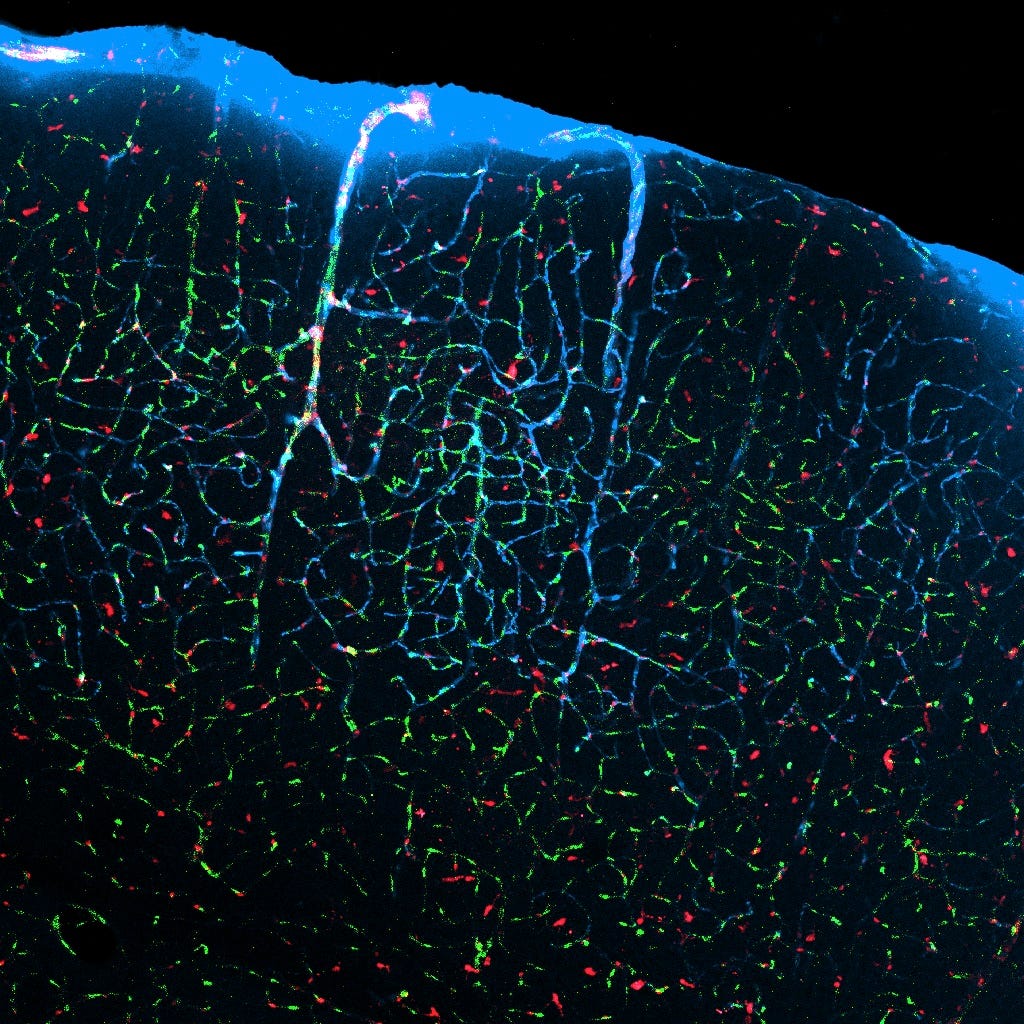
Brain washing channelsThe purple areas are the channels through which brain fluid flows, and the green areas are the glial cells that control the flow of fluid through them.
The team just discovered the brain’s unique trash disposal system last year — the find was published in the journal Science Translational Medicine on Aug. 15, 2012. It works like a plumbing system.
The brain itself is bathed in a special clear liquid called cerebrospinal fluid, which doesn’t mix with the blood and lymph system of the rest of the body. In the study from last year, they found that this fluid travels through special channels and washes the brain out.
There are two types of cells in the brain — the neurons that send signals and the glial that keep them healthy. They found that these glial cells seem to create these cleaning channels around the neurons.
It washes away toxic proteins and removes them from the brain’s circulatory system. They are transferred to the general circulatory system, where the liver can remove them.
Sleeping mice
Brain washing system When mice sleep, fluid-filled channels (pale blue) between neurons expand and flush out waste.
By studying this newfound pathway in mice trained to sleep on a microscope, the researchers found that this system was 10 times more active during sleep than it was while the mice were awake.
They injected the mice with coloured toxic proteins to see the system at work — when the mice were sleeping, these toxic proteins were removed from the brain twice as quickly as when they were awake.
In the new study, they found that while the brain is sleeping, the neurons shrink by about 60% and the channels between these cells grow and fill with fluid. The glial cells then activate their pumping system to push the brain’s cerebrospinal fluid through these extra spaces and flush out the area around the neurons.
When we wake, these channels squeeze shut again as the cells plump up, and the cerebrospinal fluid is once again found mostly around the surface of the brain, not deep inside it. While awake, this washing process acts at only about 5% of its performance during sleep.
All of this fluid movement is energy intensive, which is why the researchers think it can only happen effectively during sleep.
Normally, all of our brain’s energy is busy doing normal brain activities that support every thing we do — all of our movements, our thoughts, creating memories, and analysing the signals that come in through our senses. By shutting these processes down, our brains are able to switch into cleaning mode.
Understanding sleep
The toxins that this pathway removes are the kind responsible for neurodegenerative diseases like Alzheimer’s. Understanding this pathway not only helps us understand our need for sleep, and possibly control it better with drugs that turn it on and off, but could also lead to new ways to treat and prevent these diseases.
Alzheimer's brain cells and plaquesThe buildup of toxic waste proteins causes brain cells to die in Alzheimer’s disease.
In a Perspectives article in Science Magazine about the study, Suzana Herculano-Houzel, a brain researcher at the Universidade Federal do Rio de Janeiro, even suggested that this build-up of toxins is what turns on our need to sleep and makes us sleepy.
The mice in the study were woken up after 60 minutes of sleep, so we don’t yet know how the amount or kind of sleep humans get affects the washing process.
While it sounds counter-intuitive, this could even explain why some small-brained animals need more sleep than large-brained animals. For example, bats sleep up to 20 hours a day, while elephants sleep four.
Why? Because bigger brains have more space to store these toxins before they build up to dangerous levels and need to be flushed.
Understanding how “brain structure and function changes in the two different states (sleep-wake) suggests that we can start to think about how we can manipulate the two states,” Nedergaard told Business Insider in an email.
Manipulations could include ways to put this cleaning system into “hyperdrive” so we could sleep less, but that’s way in the future.

http://www.businessinsider.com.au/the-first-real-reason-we-need-to-sleep-2013-10


Wednesday, October 30, 2013

CLIMATE BODY URGES 15% REDUCTION TARGET

October 30, 2013
The Climate Change Authority saya the current emissions targets of five per cent isn't good enough. Picture: AFP/Paul Croc
The Climate Change Authority saya the current emissions targets of five per cent isn't good enough. Picture: AFP/Paul Crock Source: News Limited

THE independent climate change advisory body soon to be abolished by the Abbott government has recommended Australia increase its 2020 emissions reduction target to at least 15 per cent.
In its draft Targets and Progress Review report released on Wednesday, the Climate Change Authority (CCA) recommends a significant increase above the five per cent target currently agreed to by both major parties.
Authority chair Bernie Fraser described a five per cent reduction on 2000 levels as "inadequate on a number of grounds". But the authority has not made a final recommendation on what the 2020 target should be, instead canvassing two options - a 15 per cent reduction and a 25 per cent reduction.
A 15 per cent reduction was considered to be a "minimum option", the authority said.
The coalition government has said it will scrap the CCA as part of its carbon tax repeal legislation.
Mr Fraser said the government's own conditions for moving beyond a five per cent reduction had been met, and that delaying tougher action until after 2020 would require "very rapid reductions'' beyond that period.
Australia played a part in concerted international action to limit the increase in global temperatures to no more than two degrees celsius, he said.
"A five per cent target would leave Australia lagging behind others, including the United States,'' Mr Fraser said.
He said while the authority had not made a final recommendation on what the 2020 target should be, "the five per cent target is not a credible option''.
Meanwhile a new report suggests nearly a third of the world's economic output, some $US44 trillion ($A46.54 trillion), will by 2025 be in countries at the highest risk of climate change effects.
This would represent a 50 per cent increase over today in the share of global GDP in high or extreme risk countries, said an assessment published by British risk consultancy Maplecroft.
Most of these countries are ill-prepared to deal with more severe floods, storms, droughts and sea-level rise likely to result from a warming planet, and the report said much investment is required in flood and other defences to protect infrastructure and assets.
"Adaptive measures ... will, however, require the sustained commitment of governments,'' said a statement from Maplecroft.
The 67 countries at highest risk include economic giants India in 20th place and China at number 61.
Topping the list was Bangladesh, followed by Guinea-Bissau, Sierra Leone, Haiti, South Sudan, Nigeria, the Democratic Republic of Congo, Cambodia, Philippines, Ethiopia, the Central African Republic, Eritrea and Chad.
The United States and much of Europe are in the "low'' risk category - partly because they had more money to spend on adaptation measures.

http://www.news.com.au/national/climate-body-urges-15pc-reduction-target/story-fncynjr2-1226749509795 


Friday, October 18, 2013

STOP SMART METERS AUSTRALIA – ACTIONS YOU CAN TAKE

You do NOT consent to the installation of a smart meter of any kind, including modified analogue and mechanical meters, meters retro-fitted with RF indexes or microwave devices, so here are the actions you can take:
1.  Lock your meter box and  put a window in for the meter to be read Click here for examples
2. Put up the No Trespass Sign and Do Not Fit a Smart Meter Sign (owners) and Do Not Fit a Smart Meter Sign (owners or residents). It’s best to laminate it then fix it to your meter box (if you don’t have a laminator you can take it to your news agency and they can do it). Click here for a Smart Meter Action Kit
3. Sign the petition.
4. Educate/inform your neighbours, friends, colleagues about smart meters’ potential to cause serious harm to human health. Refer them to evidence from thousands of independent scientific studies (Health). Smart meters also represent a gross intrusion into your home and your privacy (Privacy). Additionally contract law, which requires consent as explained here.
5. Print out the letter Legal Advice Oct 2012 from the office of Eugene White and have it at hand at all times.
6. Subscribe to email updates from this site by entering their email address on the home page , they then receive regular updates as they are posted.
7. Write a letter (template you can use) and send it by registered mail to your utility, Minister for Energy, State Premier, Minister for Health, Department of Primary Industries, Energy and Water Ombudsman, and Essential Services Victoria. Some addresses here:
Premier Napthine,
Level 1,  1 Treasury Place,  East Melbourne,  VIC  3002

The Hon. Nicholas Kotsiras Minister for Energy and Resources
Level 2,
3 Treasury Place,
Melbourne, VIC 3000

Powercor and CitiPower
Mr Timothy Rourke,
Chief Executive Officer
Powercor and CitiPower
Locked Bag 14090
Melbourne, VIC 8001

SP AusNet
Mr Nino Ficca
Managing Director
SP AusNet
Level 31, 2 Southbank Boulevarde
Southbank, VIC 3006

Jemena
Mr Paul Adams,
Managing Director and Chief Executive Officer,
Jemena
321 Ferntree Gully Road,
Mount Waverley, VIC 3149.

United Energy
Mr Hugh Gleeson
Chief Executive Officer
Locked Bag 7000
Mount Waverley, VIC 3149

To find out who is your power distributor see here http://www.dpi.vic.gov.au/energy/electricity/electricity-distributors.
8. Subscribe to updates from reputable scientists and independent research institutions including:
http://www.next-up.org/Newsoftheworld/BioInitiativeIntro.php
http://www.hese-project.org/hese-uk/en/niemr/index.php
http://www.magdahavas.com/
http://www.facebook.com/pages/Support-Prof-Olle-Johansson/137594306315704
http://iemfa.org/index.php/publications/news
9. Keep saying No.
Please see this page for  detailed step-by-step instructions of how to do this in the most thorough way.
ESV submission – Stop Smart Meter Australia’s submission to Energy Safe Victoria.


The photos below were sent into us to show how a hole was cut so the existing meter could still be read and how to lock your meter if you don’t have a meter box.


Click here for our Smart Meter Awareness and Support Groups

http://stopsmartmeters.com.au/actions-you-can-take/ 


SMART METER REMOVAL


Friday, September 13, 2013

MASLOW'S HIERARCHY OF NEEDS

From Wikipedia, the free encyclopedia

An interpretation of Maslow's hierarchy of needs, represented as a pyramid with the more basic needs at the bottom[1]
Maslow's hierarchy of needs is a theory in psychology proposed by Abraham Maslow in his 1943 paper "A Theory of Human Motivation" in Psychological Review.[2] Maslow subsequently extended the idea to include his observations of humans' innate curiosity. His theories parallel many other theories of human developmental psychology, some of which focus on describing the stages of growth in humans. Maslow used the terms Physiological, Safety, Belongingness and Love, Esteem, Self-Actualization and Self-Transcendence needs to describe the pattern that human motivations generally move through.
Maslow studied what he called exemplary people such as Albert Einstein, Jane Addams, Eleanor Roosevelt, and Frederick Douglass rather than mentally ill or neurotic people, writing that "the study of crippled, stunted, immature, and unhealthy specimens can yield only a cripple psychology and a cripple philosophy."[3] Maslow studied the healthiest 1% of the college student population.[4]
Maslow's theory was fully expressed in his 1954 book Motivation and Personality.[5] While the hierarchy remains a very popular framework in sociology research, management training[6] and secondary and higher psychology instruction, it has largely been supplanted by attachment theory in graduate and clinical psychology and psychiatry.[7][8]

Hierarchy

Maslow's hierarchy of needs is often portrayed in the shape of a pyramid with the largest, most fundamental levels of needs at the bottom and the need for self-actualization at the top.[1][9] While the pyramid has become the de facto way to represent the hierarchy, Maslow himself never used a pyramid to describe these levels in any of his writings on the subject.
The most fundamental and basic four layers of the pyramid contain what Maslow called "deficiency needs" or "d-needs": esteem, friendship and love, security, and physical needs. If these "deficiency needs" are not met – with the exception of the most fundamental (physiological) need – there may not be a physical indication, but the individual will feel anxious and tense. Maslow's theory suggests that the most basic level of needs must be met before the individual will strongly desire (or focus motivation upon) the secondary or higher level needs. Maslow also coined the term Metamotivation to describe the motivation of people who go beyond the scope of the basic needs and strive for constant betterment.[10]
The human mind and brain are complex and have parallel processes running at the same time, thus many different motivations from various levels of Maslow's hierarchy can occur at the same time. Maslow spoke clearly about these levels and their satisfaction in terms such as "relative," "general," and "primarily." Instead of stating that the individual focuses on a certain need at any given time, Maslow stated that a certain need "dominates" the human organism.[11] Thus Maslow acknowledged the likelihood that the different levels of motivation could occur at any time in the human mind, but he focused on identifying the basic types of motivation and the order in which they should be met.

Physiological needs

Physiological needs are the physical requirements for human survival. If these requirements are not met, the human body cannot function properly, and will ultimately fail. Physiological needs are thought to be the most important; they should be met first.
Air, water, and food are metabolic requirements for survival in all animals, including humans. Clothing and shelter provide necessary protection from the elements. While maintaining an adequate birth rate shapes the intensity of the human sexual instinct, sexual competition may also shape said instinct.[2]

Safety needs

With their physical needs relatively satisfied, the individual's safety needs take precedence and dominate behavior. In the absence of physical safety – due to war, natural disaster, family violence, childhood abuse, etc. – people may (re-)experience post-traumatic stress disorder or transgenerational trauma. In the absence of economic safety – due to economic crisis and lack of work opportunities – these safety needs manifest themselves in ways such as a preference for job security, grievance procedures for protecting the individual from unilateral authority, savings accounts, insurance policies, reasonable disability accommodations, etc. This level is more likely to be found in children because they generally have a greater need to feel safe.
Safety and Security needs include:
  • Personal security
  • Financial security
  • Health and well-being
  • Safety net against accidents/illness and their adverse impacts

Love and belonging

After physiological and safety needs are fulfilled, the third level of human needs is interpersonal and involves feelings of belongingness. This need is especially strong in childhood and can override the need for safety as witnessed in children who cling to abusive parents. Deficiencies within this level of Maslow's hierarchy – due to hospitalism, neglect, shunning, ostracism, etc. – can impact the individual's ability to form and maintain emotionally significant relationships in general, such as:
  • Friendship
  • Intimacy
  • Family
According to Maslow, humans need to feel a sense of belonging and acceptance among their social groups, regardless if these groups are large or small. For example, some large social groups may include clubs, co-workers, religious groups, professional organizations, sports teams, and gangs. Some examples of small social connections include family members, intimate partners, mentors, colleagues, and confidants. Humans need to love and be loved – both sexually and non-sexually – by others.[2] Many people become susceptible to loneliness, social anxiety, and clinical depression in the absence of this love or belonging element. This need for belonging may overcome the physiological and security needs, depending on the strength of the peer pressure.

Esteem

All humans have a need to feel respected; this includes the need to have self-esteem and self-respect. Esteem presents the typical human desire to be accepted and valued by others. People often engage in a profession or hobby to gain recognition. These activities give the person a sense of contribution or value. Low self-esteem or an inferiority complex may result from imbalances during this level in the hierarchy. People with low self-esteem often need respect from others; they may feel the need to seek fame or glory. However, fame or glory will not help the person to build their self-esteem until they accept who they are internally. Psychological imbalances such as depression can hinder the person from obtaining a higher level of self-esteem or self-respect.
Most people have a need for stable self-respect and self-esteem. Maslow noted two versions of esteem needs: a "lower" version and a "higher" version. The "lower" version of esteem is the need for respect from others. This may include a need for status, recognition, fame, prestige, and attention. The "higher" version manifests itself as the need for self-respect. For example, the person may have a need for strength, competence, mastery, self-confidence, independence, and freedom. This "higher" version takes precedence over the "lower" version because it relies on an inner competence established through experience. Deprivation of these needs may lead to an inferiority complex, weakness, and helplessness.
Maslow states that while he originally thought the needs of humans had strict guidelines, the "hierarchies are interrelated rather than sharply separated".[5] This means that esteem and the subsequent levels are not strictly separated; instead, the levels are closely related.

Self-actualization

"What a man can be, he must be."[12] This quotation forms the basis of the perceived need for self-actualization. This level of need refers to what a person's full potential is and the realization of that potential. Maslow describes this level as the desire to accomplish everything that one can, to become the most that one can be.[13] Individuals may perceive or focus on this need very specifically. For example, one individual may have the strong desire to become an ideal parent. In another, the desire may be expressed athletically. For others, it may be expressed in paintings, pictures, or inventions.[14] As previously mentioned, Maslow believed that to understand this level of need, the person must not only achieve the previous needs, but master them.

Research

Recent research appears to validate the existence of universal human needs, although the hierarchy proposed by Maslow is called into question.[15][16] Other research indicates that Maslow's explanations of the hierarchy of human motivation reflect a binary pattern of growth as seen in math. The individual's awareness of first, second, and third person perspectives, and of each one's input needs and output needs, moves through a general pattern that is basically the same as Maslow's.[17]
Following World War II, the unmet needs of homeless and orphaned children presented difficulties that were often addressed with the help of attachment theory, which was initially based on Maslow and others' developmental psychology work by John Bowlby.[18] Originally dealing primarily with maternal deprivation and concordant losses of essential and primal needs, attachment theory has since been extended to provide explanations of nearly all the human needs in Maslow's hierarchy, from sustenance and mating to group membership and justice.[8] While Maslow's hierarchy remains a very popular framework in sociology research and secondary and postsecondary psychology instruction, it has largely been supplanted by attachment theory in graduate and clinical psychology and psychiatry.[7]

Criticism

In their extensive review of research based on Maslow's theory, Wahba and Bridwell found little evidence for the ranking of needs that Maslow described or for the existence of a definite hierarchy at all.[19]
The order in which the hierarchy is arranged (with self-actualization described as the highest need) has been criticized as being ethnocentric by Geert Hofstede.[20] Maslow's hierarchy of needs fails to illustrate and expand upon the difference between the social and intellectual needs of those raised in individualistic societies and those raised in collectivist societies. The needs and drives of those in individualistic societies tend to be more self-centered than those in collectivist societies, focusing on improvement of the self, with self-actualization being the apex of self-improvement. In collectivist societies, the needs of acceptance and community will outweigh the needs for freedom and individuality.[21] The term "Self-actualization" may not universally convey Maslow's observations; this motivation refers to focusing on becoming the best person that one can possibly strive for in the service of both the self and others.[11] Maslow's term of self-actualization might not properly portray the full extent of this level; quite often, when a person is at the level of self-actualization, much of what they accomplish in general may benefit others or, "the greater self".
The position and value of sex on the pyramid has also been a source of criticism regarding Maslow's hierarchy. Maslow's hierarchy places sex in the physiological needs category along with food and breathing; it lists sex solely from an individualistic perspective. For example, sex is placed with other physiological needs which must be satisfied before a person considers "higher" levels of motivation. Some critics feel this placement of sex neglects the emotional, familial, and evolutionary implications of sex within the community, although others point out that this is true of all of the basic needs.[22][23]

Changes to the hierarchy by circumstance

The higher-order (self-esteem and self-actualization) and lower-order (physiological, safety, and love) needs classification of Maslow's hierarchy of needs is not universal and may vary across cultures due to individual differences and availability of resources in the region or geopolitical entity/country.
In one study, exploratory factor analysis (EFA) of a thirteen item scale showed there were two particularly important levels of needs in the US during the peacetime of 1993 to 1994: survival (physiological and safety) and psychological (love, self-esteem, and self-actualization). In 1991, a retrospective peacetime measure was established and collected during the Persian Gulf War and US citizens were asked to recall the importance of needs from the previous year. Once again, only two levels of needs were identified; therefore, people have the ability and competence to recall and estimate the importance of needs. For citizens in the Middle East (Egypt and Saudi Arabia), three levels of needs regarding importance and satisfaction surfaced during the 1990 retrospective peacetime. These three levels were completely different from those of the US citizens.
Changes regarding the importance and satisfaction of needs from the retrospective peacetime to the wartime due to stress varied significantly across cultures (the US vs. the Middle East). For the US citizens, there was only one level of needs since all needs were considered equally important. With regards to satisfaction of needs during the war, in the US there were three levels: physiological needs, safety needs, and psychological needs (social, self-esteem, and self-actualization). During the war, the satisfaction of physiological needs and safety needs were separated into two independent needs while during peacetime, they were combined as one. For the people of the Middle East, the satisfaction of needs changed from three levels to two during wartime.[24][25][26]
A 1981 study looked at how Maslow's hierarchy might vary across age groups.[27] A survey asked participants of varying ages to rate a set number of statements from most important to least important. The researchers found that children had higher physical need scores than the other groups, the love need emerged from childhood to young adulthood, the esteem need was highest among the adolescent group, young adults had the highest self-actualization level, and while old age had the highest level of security, it was needed across all levels comparably. The authors argued that this suggested Maslow's hierarchy may be limited as a theory for developmental sequence since the sequence of the love need and the self-esteem need should be reversed according to age.

See also

Further reading

References

  1. ^ a b Maslow's Hierarchy of Needs
  2. ^ a b c Maslow, A.H. (1943). A theory of human motivation. Psychological Review, 50(4), 370–96. Retrieved from http://psychclassics.yorku.ca/Maslow/motivation.htm
  3. ^ Maslow, A (1954). Motivation and personality. New York, NY: Harper. p. 236. ISBN 0-06-041987-3.
  4. ^ Mittelman, W. (1991). Maslow's study of self-actualization: A reinterpretation. Journal of Humanistic Psychology, 31(1), 114–135. doi: 10.1177/0022167891311010
  5. ^ a b Maslow, A. (1954). Motivation and personality. New York, NY: Harper.
  6. ^ Kremer, William Kremer; Hammond, Claudia (31 August 2013). "Abraham Maslow and the pyramid that beguiled business". BBC news magazine. Retrieved 1 September 2013.
  7. ^ a b van IJzendoorn MH, Sagi-Schwartz A (2008). "Cross-Cultural Patterns of Attachment; Universal and Contextual Dimensions". In Cassidy J, Shaver PR. Handbook of Attachment: Theory, Research and Clinical Applications. New York and London: Guilford Press. pp. 880–905. ISBN 9781593858742.
  8. ^ a b Bugental DB (2000). "Acquisition of the Algorithms of Social Life: A Domain-Based Approach". Psychological Bulletin 126 (2): 178–219. doi:10.1037/0033-2909.126.2.187. PMID 10748640.
  9. ^ Steere, B. F. (1988). Becoming an effective classroom manager: A resource for teachers.. Albany, NY: SUNY Press. ISBN 0-88706-620-8, 9780887066207 Check |isbn= value (help).
  10. ^ Goble, F. (1970). The third force: The psychology of Abraham Maslow. Richmond, CA: Maurice Bassett Publishing. pp. 62.
  11. ^ a b Maslow, A. (1954). Motivation and personality. New York, NY: Harper
  12. ^ Maslow, A. (1954). Motivation and personality. New York, NY: Harper. pp. 91.
  13. ^ Maslow, A. (1954). Motivation and personality. New York, NY: Harper. pp. 92.
  14. ^ Maslow, A. (1954). Motivation and personality. New York, NY: Harper. pp. 93.
  15. ^ Villarica, H. (2011, Aug 17). Maslow 2.0: A new and improved recipe for happiness. The Atlantic. Retrieved from http://www.theatlantic.com/life/archive/2011/08/maslow-20-a-new-and-improved-recipe-for-happiness/243486/#.TkvKIRv8USE.facebook
  16. ^ Tay, L., & Diener, E. (2011). Needs and subjective well-being around the world. Journal of Personality and Social Psychology, 101(2), 354–365. doi: 10.1037/a0023779
  17. ^ Cronburg, T. (2010). Maslow 2.0 human hierarchy of needs [Image]. Retrieved from [1]
  18. ^ Bretherton, I. (1992). "The Origins of Attachment Theory: John Bowlby and Mary Ainsworth". Developmental Psychology 28 (5): 759–775. doi:10.1037/0012-1649.28.5.759.
  19. ^ Wahba, M. A., & Bridwell, L. G. (1976). Maslow reconsidered: A review of research on the need hierarchy theory. Organizational Behavior and Human Performance, 15(2), 212–240. doi: 10.1016/0030-5073(76)90038-6
  20. ^ Hofstede, G. (1984). The cultural relativity of the quality of life concept. Academy of Management Review, 9(3), 389–398. Retrieved from http://www.nyegaards.com/yansafiles/Geert%20Hofstede%20cultural%20attitudes.pdf
  21. ^ Cianci, R., & Gambrel, P. A. (2003). Maslow's hierarchy of needs: Does it apply in a collectivist culture. Journal of Applied Management and Entrepreneurship, 8(2), 143–161.
  22. ^ Kenrick, D. (2010, May 19). Rebuilding Maslow's pyramid on an evolutionary foundation. Psychology Today. Retrieved from http://www.psychologytoday.com/blog/sex-murder-and-the-meaning-life/201005/rebuilding-maslow-s-pyramid-evolutionary-foundation
  23. ^ Kenrick, D. T., Griskevicius, V., Neuberg, S. L., & Schaller, M. (2010). Renovating the pyramid of needs: Contemporary extensions built upon ancient foundations. Perspectives on Psychological Science, 5, 292. doi: 10.1177/1745691610369469
  24. ^ Tang, T. L., & West, W. B. (1997). The importance of human needs during peacetime, retrospective peacetime, and the Persian Gulf War. International Journal of Stress Management, 4(1), 47–62.
  25. ^ Tang, T. L., & Ibrahim, A. H. (1998). Importance of human needs during retrospective peacetime and the Persian Gulf War: Mid-eastern employees. International Journal of Stress Management, 5(1), 25–37. Retrieved from http://www.springerlink.com/content/h1q9vg84760uhh5u/
  26. ^ Tang, T. L., Ibrahim, A. H., & West, W. B. (2002). Effects of war-related stress on the satisfaction of human needs: The United States and the Middle East. International Journal of Management Theory and Practices, 3(1), 35–53.
  27. ^ Goebel, B. L., & Brown, D. R. (1981). Age differences in motivation related to Maslow's need hierarchy. Developmental Psychology, 17, 809–815. doi: 10.1037/0012-1649.17.6.809

External links

http://en.wikipedia.org/wiki/Maslow%27s_hierarchy_of_needs